

Valdibella
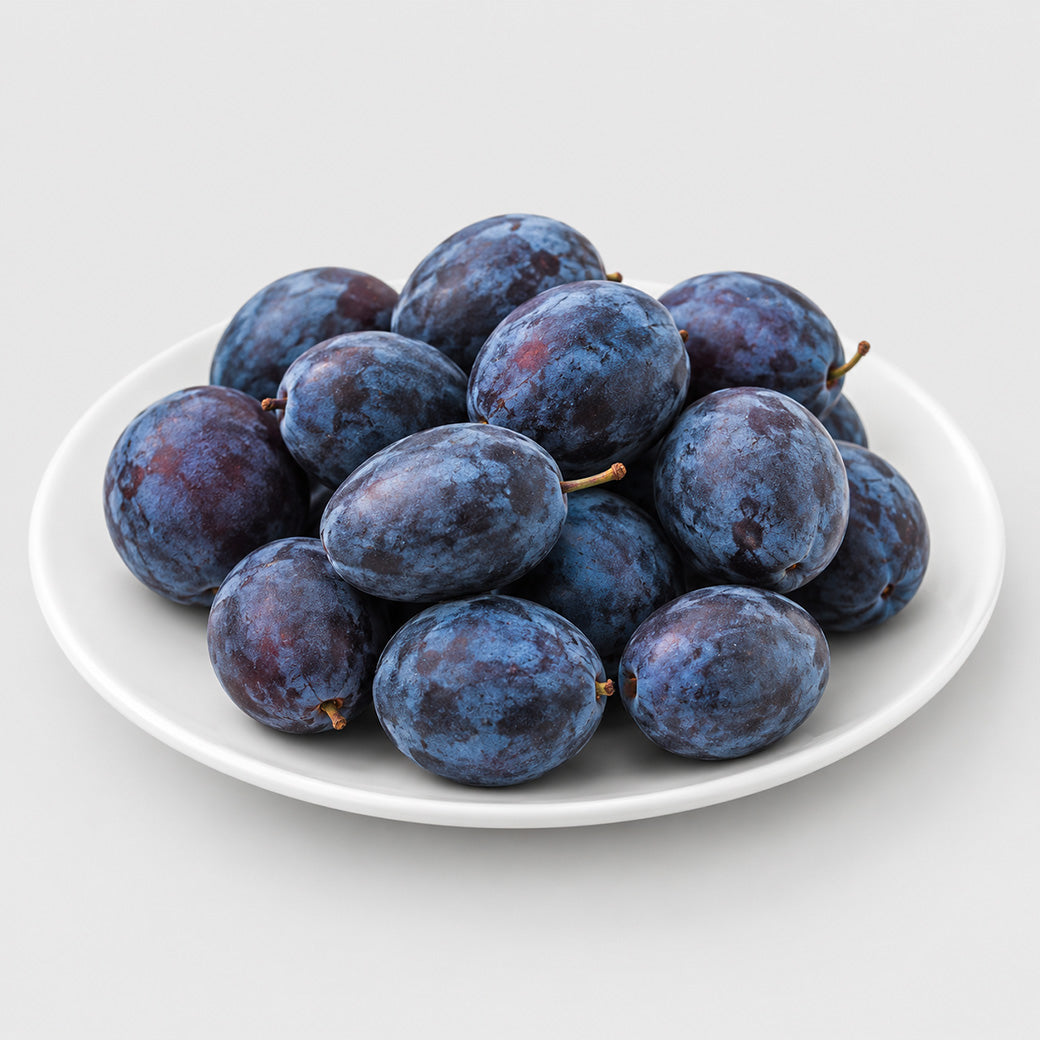
Stanley Plum 1 kg
Collection at Flemming’s Wine Shop & Bar
Sázavská 807/14
120 00 Prague 2
Monday–Tuesday · 8.00 am–6.00 pm
Wednesday–Saturday · 8.00 am–10.30 pm
Sunday · 8.00 am–4.00 pm
Stanley Plum 1 kg
FLEMMING'S - Wholesale
Údolní 212/1
147 00 Hlavní město Praha
Czechia
FLEMMING'S - Wine and Gourmet Shop
Sázavská 807
120 00 Praha 2
Czechia
OrganicProducer: Francesco BisulcaBotanical name: Prunus domestica L. ‘Stanley’
Francesco Bisulca’s farm has belonged to his family for three generations and isnow cultivated by Francesco with three collaborators. It lies in the Alto Belice area ofwestern Sicily, between the protected woodlands of Bosco della Ficuzza and MonteSan Leonardo. Here, naturally moist soils rich in minerals support an abundance ofexceptional fruit without irrigation. Alongside several varieties of plums, the farmalso has an olive grove of approximately 300 trees.
ORIGIN OF THE NAME
Stanley is the name of the cultivated variety, just as Granny Smith identifies aparticular apple. It was created by the horticulturist Richard Wellington at the NewYork State Agricultural Experiment Station in Geneva, New York, from a cross
between the famous French prune plum d’Agen and the large Grand Duke,distinguished by its dark skin.
The cross was made in 1913, and the resulting variety was introduced commerciallyin 1926. A small agricultural hamlet named Stanley lies near Geneva, making it apersuasive possible source of the name, although the Experiment Station’ssurviving accounts do not appear to confirm this explicitly. What is firmlydocumented is that Wellington’s Stanley went on to become one of the world’s mostwidely cultivated European plums.
FLAVOUR AND USE
Stanley is an elongated plum with dark purple skin, firm golden flesh and abeautifully balanced, richly sweet flavour. Its naturally high sugar content andrelatively firm texture make it unusually versatile: delicious eaten fresh, yet equallywell suited to cooking, preserving and drying.
It belongs to the group commonly known as prune plums, not because the fresh fruitis itself a prune, but because its dense flesh and concentrated sweetness allow it tobe dried successfully into one. The fruit also handles and stores particularly well,qualities that helped Stanley become an important variety for both growers andcooks